
 IFAS Extension

Introduction
This cultivar of Winterberry's bright yellow, persistent berries provide vibrant color in early winter after the leaves have fallen off. Berries may not persist as long as those of the species.
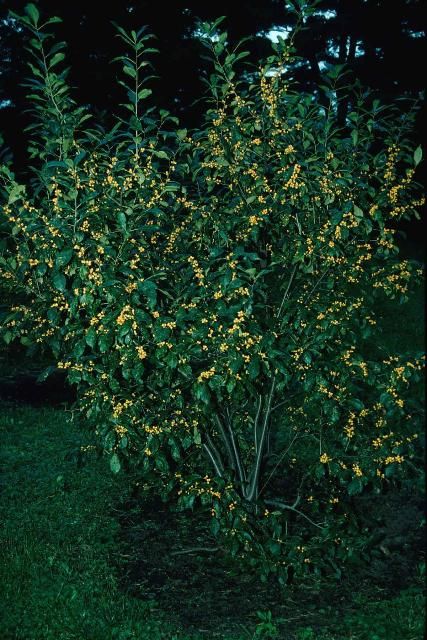
Credit: Ed Gilman
General Information
Scientific name: Ilex verticillata
Pronunciation: EYE-lecks ver-tiss-sill-LAY-tuh
Common name(s): 'Chrysocarpa' Winterberry
Family: Aquifoliaceae
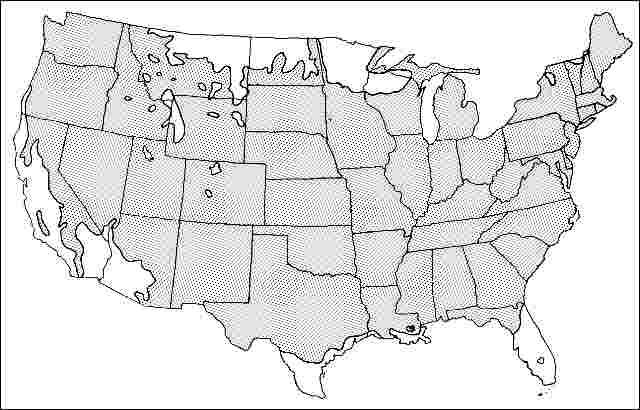
USDA hardiness zones: 4A through 8B (Fig. 2)
Origin: native to North America
Invasive potential: little invasive potential
Uses: Bonsai; container or planter; reclamation; specimen; highway median
Availability: not native to North America
Description
Height: 6 to 10 feet
Spread: 5 to 10 feet
Crown uniformity: symmetrical
Crown shape: round, vase
Crown density: moderate
Growth rate: slow
Texture: fine
Foliage
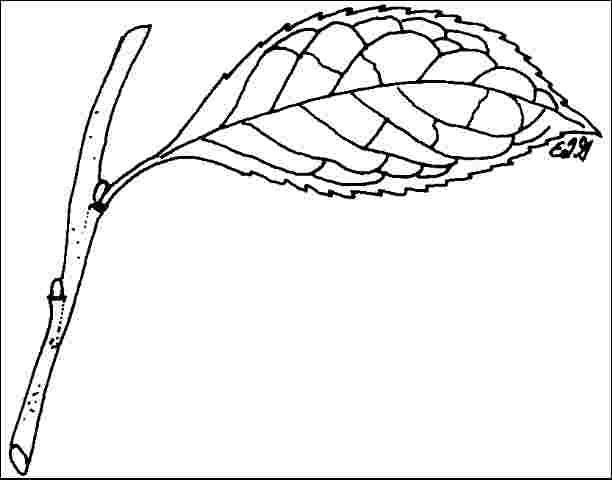
Leaf arrangement: alternate (Fig. 3)
Leaf type: simple
Leaf margin: serrate, double serrate
Leaf shape: oblanceolate
Leaf venation: brachidodrome, pinnate
Leaf type and persistence: deciduous
Leaf blade length: less than 2 inches, 2 to 4 inches
Leaf color: green
Fall color: no color change
Fall characteristic: not showy
Flower
Flower color: white/cream/gray
Flower characteristics: not showy
Fruit
Fruit shape: round
Fruit length: less than .5 inch
Fruit covering: fleshy
Fruit color: yellow
Fruit characteristics: attracts birds; showy; fruit/leaves not a litter problem
Trunk and Branches
Trunk/bark/branches: branches droop; not showy; typically multi-trunked; thorns
Pruning requirement: little required
Breakage: resistant
Current year twig color: brown
Current year twig thickness: thin
Wood specific gravity: unknown
Culture
Light requirement: full sun, partial sun or partial shade
Soil tolerances: sand; loam; clay; acidic; well-drained; occasionally wet
Drought tolerance: moderate
Aerosol salt tolerance: unknown
Other
Roots: not a problem
Winter interest: yes
Outstanding tree: yes
Ozone sensitivity: unknown
Verticillium wilt susceptibility: resistant
Pest resistance: free of serious pests and diseases
Use and Management
It grows 6 to 10 feet tall, spreads 5 to 10 feet on thin, multistemmed branches, and grows slowly. Branches and stems weep under the weight of the foliage and berries creating a graceful, vase-shaped, symmetrical canopy. Young plants are somewhat irregularly shaped. Winterberry is dioecious, so both male and female plants are needed for fruit production. The fruits of this native are often eaten by birds but birds appear to prefer the red berries of the species.
Use it in a shrub border or landscape as a specimen, or any other area to attract birds. When planted in turf as a specimen, be sure to keep the soil under the canopy mulched so weeping stems and branches can droop to display the nice form. If turf is allowed to grow beneath the crown, it will thin due to the dense shade and low branches will interfere with mowing equipment. Little pruning is needed if the plant is properly located to allow for its spread. The plant grows in sun or partial shade in a rich, well-drained, acid soil, though it tolerates swampy areas. Its tolerance to wet soil makes this a useful plant in poorly-drained landscapes. It is not drought-tolerant.
Other cultivars include: `Fastigiata' - narrow, upright; `Nana' - 3 1/2 feet tall, large fruits; `Winter Red' - dense branching, dark foliage, heavy fruit production. There are a variety of other cultivars for form, fruit characteristics and hardiness. Cultivars may be hard to find.
Pests and Diseases
No pests or diseases are serious.