Habilidades Comunicativas
Idiomas disponibles:
Español
Temas más específicos
Creación de historias
Ya sea para el crecimiento personal, la construcción de relaciones o el liderazgo de equipos, conocer su historia y cómo compartirla cambiará la forma en que una persona interactúa con el mundo. Al compartir estas historias, se ayuda a otros a aprender de sus experiencias y a establecer conexiones humanas significativas. Al aprender a reflexionar sobre su pasado, estará mejor equipado para comprometerse con su futuro. La narración fomenta la colaboración con individuos y organizaciones por igual. Al desarrollar la historia de su organización, puede mejorar las relaciones con los clientes, el compromiso de los empleados y los estilos de gestión. Es importante elaborar la historia de una manera que permita compartirla de manera efectiva porque, como dijo la difunta poeta Maya Angelou: "La gente olvidará lo que dijo, pero nunca olvidará cómo los hizo sentir". Si una historia puede invocar emociones dentro de su audiencia, los miembros de la audiencia se conectarán con el producto y mensaje.
Publicaciones
Showing 12 of 12 Publications

Setting Transparent Expectations for Successful Group Work
Cecilia Elizabeth Suarez, Cecilia Elizabeth Suarez, yJarred Shellhouse
Regardless of workspace or class setting, group work has gotten a reputation for being less than pleasant. However, when individuals have the opportunity to prepare for group work via understanding their personal strengths, expectations, and perspectives, the not-so-popular group work can often turn into pleasant, productive, and collaborative engagement.
Leading Difficult Conversations Series #4: Communication Styles under Stress
Christy Chiarelli
This new 3-page publication of the UF/IFAS Department of Agricultural Education and Communication focuses on helping leaders better understand their communication style when under stress. Even with adequate preparation, difficult conversations can still be stressful. By understanding their communication style under stress, leaders can better regulate their personal responses to ensure a productive conversation. Written by Christy C. Chiarelli.
Strategies for Building and Maintaining Communication Between 4-H Professionals and Local Military Partners
Jeremiah Johnson, Claudia Meeks, Alyssa Schortinghouse, Vanessa Tranel, yDavid Brittain
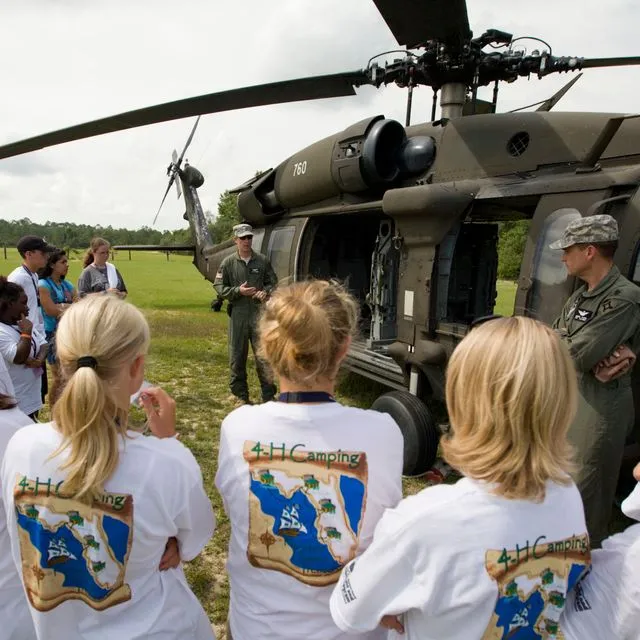
This publication presents strategies for 4-H professionals to effectively build and maintain communication with local military partners. Emphasizing the importance of relationship-building, shared expectations, and structured communication, this guide introduces a scalable conversation model to facilitate productive dialogue. It covers topics such as understanding military organizational structures, preparing for meetings, fostering inclusive and goal-oriented conversations, and following up to ensure sustainable partnerships. The resource also highlights best practices and provides actionable guidance for continuous engagement and adaptation to the evolving nature of the relationship between military and Extension professionals.
Smartphone Photography to Communicate Science
Lisa K. Lundy
This article discusses the important role that photographs play in science communication. Tips are given for enhancing photography using smartphones.
Intercultural Competencies: Understanding High- vs. Low-Context Cultures
Pablo Lamino yJohn Diaz
This first publication in the Intercultural Competencies series provides valuable insights and recommendations on engaging individuals from various backgrounds by understanding and applying high-context and low-context cultural communication styles. Written by Pablo Lamino and John Diaz and published by the UF/IFAS Department of Agricultural Education and Communication, November 2024.
Using the Delphi Technique to Achieve Consensus: A Tool for Guiding Extension Programs
Laura A. Warner
The ability to achieve a group consensus may be critical during specific activities throughout an Extension professional’s career. For example, it may be important to identify an advisory committee’s highest priorities or a group of stakeholders’ most important programmatic needs. The Delphi method has been recognized as a suitable alternative to interviews and formal meetings in certain circumstances. This fact sheet provides an overview of the Delphi method and suggestions for using this technique to support Extension programming.
Rahim Organizational Conflict Inventory: Instrumentation and Application for Extension Professionals
Christy Chiarelli, Anne Parrish, Megan Cantrell, and Matt Benge
Conflict is inevitable in workplaces among people of all ages. Extension professionals have a unique position where in a single workday they may be engage with youth and volunteers, as well as colleagues and supervisors. Extension professionals may experience conflict with their stakeholders, volunteers, and supervisors; therefore, they must be able to understand conflict and conflict styles to navigate tense situations. The Rahim Organizational Conflict Inventory (ROCI) is an instrument that can be used to understand one’s interpersonal conflict management style. By having a strong understanding of conflict components and for utilizing the ROCI tool, Extension professionals can manage conflict well and reduce the likelihood of dysfunctional conflict destroying relationships, teams, and organizations.
Life Skills in a Minute: Sending a Card
Heather M. Futch
Most of us have received a greeting card at some point in our lives. Receiving a card in the mail is an experience: pulling it out of the mailbox, reading the outside of the envelope, breaking the seal, pulling out the card, reading the note from the sender, and then placing it somewhere special.
IFAS Leadership Development: Giving and Receiving Feedback
Muthusami Kumaran
A UF/IFAS numbered publication.
IFAS Leadership Development: Leaders Can Communicate
Muthusami Kumaran
A UF/IFAS numbered publication.
Making an Effective Virtual Scientific Poster Presentation
Joe Barrett Carter III, Jithran Ekanayake, Taisha Venort, Kelsey Vought, Shannon Noble, and Adam Watson
This publication aims to provide guidance, strategies, and recommended tools to help aspiring presenters effectively adapt to the virtual environment and present their findings. Written by Joe Barrett Carter III, Jithran Ekanayake, Taisha Venort, Kelsey Vought, Shannon Noble, and Adam Watson, and published by the UF/IFAS Department of Agricultural and Biological Engineering, December 2023.
IFAS Leadership Development: Listening to Learn
Muthusami Kumaran
This article is part of a series IFAS Leadership Development, with eleven modules developed for use by Florida Cooperative Extension agents. They are designed for training agents and officers. Information and activities provided in this series will help Extension leaders in facilitating leadership development for their agents and officers. Handouts for audience use are labeled in the leadership development modules. These may be duplicated for use during training sessions. Each lesson is designed for a workshop approximately two hours long. Various parts of the modules can be shortened or expanded according to the needs of participants and availability of time.