
Introduction
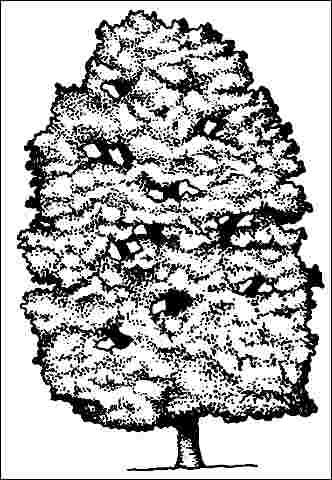
Horsechestnut can grow 90 or 100 feet tall, but is often 50 to 75 feet in the landscape with a spread of 40 to 50 feet. The trunk grows to three feet thick and is covered with dark, somewhat exfoliating bark. The prominent white flowers, occurring in panicles at the branch tips, are the main ornamental feature of horsechestnut. The large brown nuts covered with spiny husks fall and can dent cars and create a hazard on hard surfaces as people roll on the golfball-sized fruit.
General Information
Scientific name: Aesculus hippocastanum
Pronunciation: ESS-kew-lus hip-oh-kass-TAY-num
Common name(s): Horsechestnut, European horsechestnut
Family: Hippocastanaceae
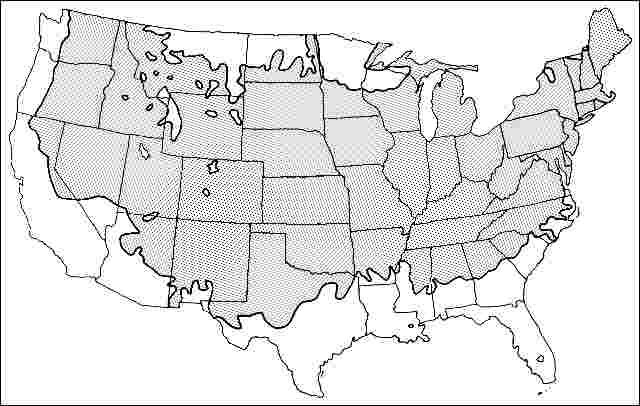
USDA hardiness zones: 4A through 7B (Fig. 2)
Origin: not native to North America
Invasive potential: little invasive potential
Uses: shade; street without sidewalk; screen; specimen
Availability: not native to North America
Description
Height: 50 to 80 feet
Spread: 40 to 50 feet
Crown uniformity: symmetrical
Crown shape: oval, round
Crown density: dense
Growth rate: moderate
Texture: coarse
Foliage
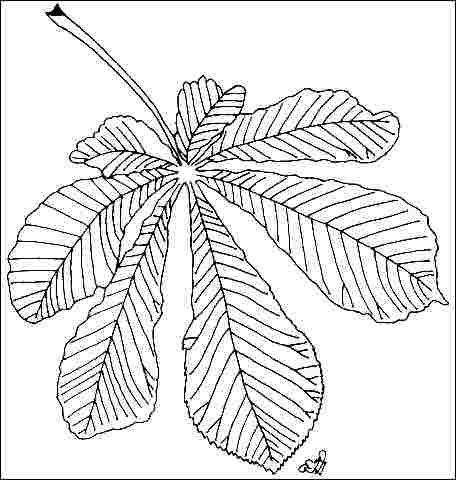
Leaf arrangement: opposite/subopposite (Fig. 3)
Leaf type: palmately compound
Leaf margin: double serrate
Leaf shape: obovate
Leaf venation: pinnate
Leaf type and persistence: deciduous
Leaf blade length: 4 to 8 inches, 8 to 12 inches
Leaf color: green
Fall color: yellow
Fall characteristic: not showy
Flower
Flower color: white/cream/gray
Flower characteristics: very showy
Fruit
Fruit shape: oval, round
Fruit length: 1 to 3 inches
Fruit covering: dry or hard
Fruit color: brown
Fruit characteristics: attracts squirrels/mammals; showy; fruit/leaves a litter problem
Trunk and Branches
Trunk/bark/branches: branches droop; showy; typically one trunk; thorns
Pruning requirement: needed for strong structure
Breakage: resistant
Current year twig color: brown
Current year twig thickness: very thick
Wood specific gravity: unknown
Culture
Light requirement: full sun
Soil tolerances: clay; sand; loam; alkaline; acidic; well-drained
Drought tolerance: moderate
Aerosol salt tolerance: moderate
Other
Roots: not a problem
Winter interest: yes
Outstanding tree: no
Ozone sensitivity: tolerant
Verticillium wilt susceptibility: resistant
Pest resistance: sensitive to pests/diseases
Use and Management
The growth rate is rapid while the tree is young but slows down with age. Horsechestnut is weak-wooded and some branches break from the trunk under ice or snow loads. The tree usually develops leaf scorch in dry soil, and powdery mildew during the summer, causing leaves to drop. Leaf blotch disease is also common. This limits its wide use in any one area, but any landscape would benefit from a horsechestnut or two. It is also very tolerant of city conditions and does well in small, restricted root zone areas such as along streets. Sensitivity to air pollution injury makes it unsuited for downtown areas—best in the suburbs.
Horsechestnut prefers a sunny exposure sheltered from wind but casts dense shade with coarse-textured leaves. The tree is easily transplanted and grows in almost any urban soil, including alkaline. The large leaves, nuts, and dropping twigs create litter that is considered by many to be objectionable. It is probably best located away from hard surfaces where people can enjoy it from a distance. Only moderately drought-tolerant. Will grow in calcareous soil.
Several cultivars can be found but they will still have leaf scorch problems: 'Baumannii'—70 feet tall, oval, pH-adapted, has double flowers, grows slower and does not produce any nuts, so if the tree is grown this cultivar is highly recommended; 'Pendula'—has drooping branches; 'Pyramidalis'—upright; 'Rubicunda'—flowers salmon red; 'Tortuosa'—contorted growth.
Pests
White-marked tussock moth is a fuzzy caterpillar. The insect has black marks and four tufts of hair on its back.
Japanese beetle eats the leaves down to the veins. Leaves at the top and south side of the plant are often most affected and attacks can be quite sudden.
Diseases
Leaf blotch causes diseased areas of variable size on the leaves. The diseased areas are at first discolored and watersoaked, later turning light reddish brown with bright yellow margins. If the entire leaf is affected it will dry, turn brown, and fall off. Leaf stalks may also be attacked. This disease looks very much like scorch from dry soil and is prevalent over a wide geographical area. Rake up and destroy old leaves.
A leaf spot disease will cause small brown circular spots on the leaves.
Powdery mildew covers the undersides of the leaves with white mold.
Anthracnose may infect terminal shoots several inches from the tip. The infected area is shrunken and the outer layers of tissue may be ruptured.
Leaf scorch is a physiological problem but will not kill the tree. The leaf margins turn brown, and then browning moves progressively inward between the veins. Eventually the entire leaf turns brown. The condition occurs in mid-summer. Keep the plant well-watered during dry weather.