
Introduction
Indian horsechestnut is a large, rounded tree, reaching up to 100 feet in height, with nine-inch-long leaves and smooth, grayish-red bark. Trees grown in an open landscape setting probably reach about 40 to 60 feet tall. In June and July, the tree is decorated with upright panicles of white blooms, the flowers stalks most often seen four to six inches high, but they may be much larger. These blooms are followed by the production of a spiny, green fruit that holds several brown seeds.

General Information
Scientific name: Aesculus indica
Pronunciation: ESS-kew-lus IN-dih-kuh
Common name(s): Indian horsechestnut
Family: Hippocastanaceae
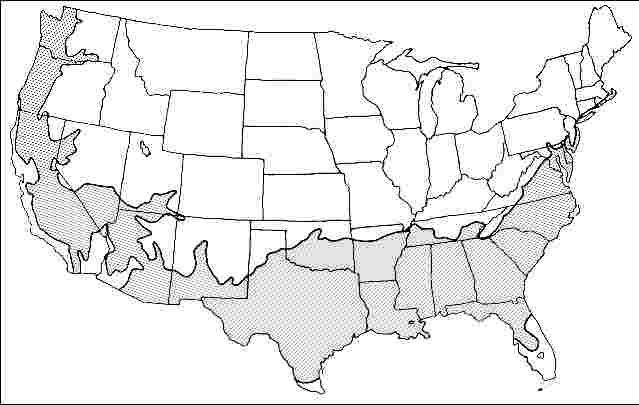
USDA hardiness zones: 7A through 9A (Fig. 2)
Origin: not native to North America
Invasive potential: little invasive potential
Uses: specimen; shade; highway median
Availability: not native to North America
Description
Height: 40 to 60 feet
Spread: 35 to 50 feet
Crown uniformity: symmetrical
Crown shape: round, oval
Crown density: dense
Growth rate: moderate
Texture: coarse
Foliage
Leaf arrangement: opposite/subopposite (Fig. 3)
Leaf type: palmately compound
Leaf margin: serrate, undulate
Leaf shape: obovate
Leaf venation: pinnate
Leaf type and persistence: deciduous
Leaf blade length: 4 to 8 inches, 8 to 12 inches
Leaf color: green
Fall color: orange
Fall characteristic: not showy

Flower
Flower color: white/cream/gray
Flower characteristics: very showy
Fruit
Fruit shape: round
Fruit length: 1 to 3 inches
Fruit covering: dry or hard
Fruit color: green
Fruit characteristics: attracts squirrels/mammals; showy; fruit/leaves a litter problem
Trunk and Branches
Trunk/bark/branches: branches droop; not showy; typically one trunk; thorns
Pruning requirement: needed for strong structure
Breakage: resistant
Current year twig color: gray, brown
Current year twig thickness: thick
Wood specific gravity: unknown
Culture
Light requirement: full sun
Soil tolerances: clay; sand; loam; acidic; slightly alkaline; well-drained
Drought tolerance: moderate
Aerosol salt tolerance: none
Other
Roots: not a problem
Winter interest: yes
Outstanding tree: yes
Ozone sensitivity: unknown
Verticillium wilt susceptibility: resistant
Pest resistance: resistant to pests/diseases
Use and Management
The tree has not been extensively available, but could make a nice park or landscape tree for a large commercial landscape or an estate. It has been successfully grown in California and in the northwest part of the United States, and could be tried in the East. The cold hardiness of the plant is uncertain. The coarse texture, low-branching habit, and uniformly round canopy make it stand out among other trees. Children would enjoy climbing this well-branched tree. The beauty of this tree calls for some trials in the eastern part of the country.
The cultivar 'Sydney Pearce' has richer green leaves and flower-spikes 12 inches high.
Pests and Diseases
The pests and diseases affecting this tree are not well understood due to the limited experience with this tree.