
Introduction
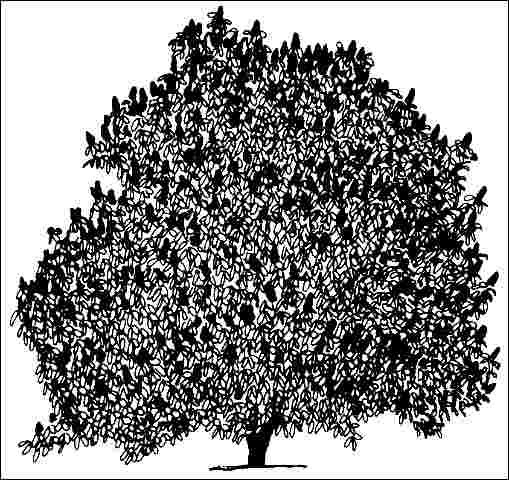
This hybrid of Aesculus hippocastanum and Aesculus pavia has very large, dark green leaves composed of five to seven leaflets, and will ultimately reach a height and spread of 30 to 40 feet. Although deciduous, red horsechestnut does not produce any appreciable fall color and is well suited for use as a specimen. The tree is quite striking with dark green, coarse-textured foliage. Pyramidal in shape when very young, red horsechestnut develops slowly into a round, very dense shade tree by five to seven years of age, and is outstanding in the landscape for its beautiful springtime display of blossoms. The multitude of pink to bright scarlet blooms appear on erect, eight-inch-long panicles at each branch tip and are quite attractive to bees and hummingbirds. The prickly, rather messy, poisonous seedpods appear in fall.
General Information
Scientific name: Aesculus x carnea
Pronunciation: ESS-kew-lus x KAR-nee-uh
Common name(s): Red horsechestnut
Family: Hippocastanaceae
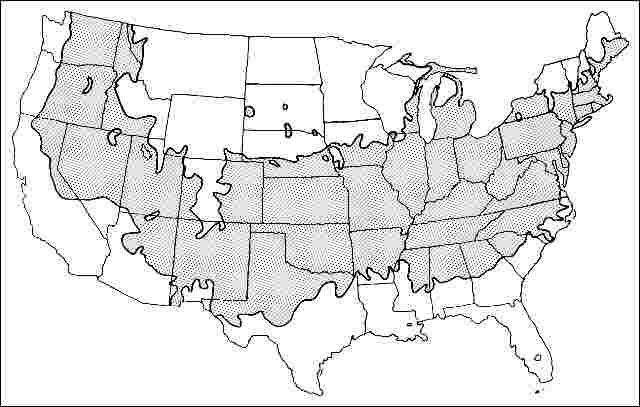
USDA hardiness zones: 5A through 7B (Fig. 2)
Origin: not native to North America
Invasive potential: little invasive potential
Uses: street without sidewalk; sidewalk cutout (tree pit); tree lawn 3–4 feet wide; tree lawn 4–6 feet wide; tree lawn > 6 ft. wide; parking lot island 100–200 sq. ft.; parking lot island > 200 sq. ft.; specimen; shade; screen; highway median; container or planter
Availability: somewhat available, may have to go out of the region to find the tree
Description
Height: 30 to 45 feet
Spread: 30 to 45 feet
Crown uniformity: symmetrical
Crown shape: pyramidal, round
Crown density: dense
Growth rate: slow
Texture: coarse
Foliage
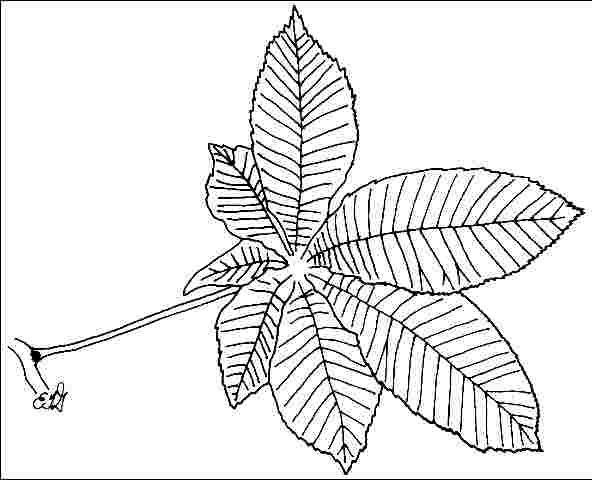
Leaf arrangement: opposite/subopposite (Fig. 3)
Leaf type: palmately compound
Leaf margin: serrate
Leaf shape: oblanceolate
Leaf venation: pinnate
Leaf type and persistence: deciduous
Leaf blade length: 4 to 8 inches
Leaf color: green
Fall color: no color change
Fall characteristic: not showy
Flower
Flower color: pink, red
Flower characteristics: very showy
Fruit
Fruit shape: round, oval
Fruit length: 1 to 3 inches
Fruit covering: dry or hard
Fruit color: brown
Fruit characteristics: attracts squirrels/mammals; not showy; fruit/leaves a litter problem
Trunk and Branches
Trunk/bark/branches: branches droop; not showy; typically multi-trunked; thorns
Pruning requirement: needed for strong structure
Breakage: resistant
Current year twig color: brown
Current year twig thickness: thick
Wood specific gravity: unknown
Culture
Light requirement: full sun
Soil tolerances: clay; sand; loam; acidic; well-drained
Drought tolerance: moderate
Aerosol salt tolerance: moderate
Other
Roots: not a problem
Winter interest: no
Outstanding tree: yes
Ozone sensitivity: unknown
Verticillium wilt susceptibility: resistant
Pest resistance: resistant to pests/diseases
Use and Management
Leaf and flower litter in the summer and fall may be objectionable to some people since the leaves are large and decompose slowly. The nuts make good food for wildlife, but you may not want it scattered along city streets. They can make great ammunition for throwing at moving objects, windows, and other people, so locate it accordingly. Makes a great median street tree when provided with some irrigation during drought.
Red horsechestnut will grow in full sun or light shade and prefers moist, well-drained, acid soils but grows in slightly alkaline soil. Plants are moderately tolerant to drought, wind, and salt, and resist the heat of the South very well. It holds up well in urban areas, even in restricted and compacted soil spaces. Red horsechestnut appears to be less susceptible to disease than either of the parents. Trunk bark may crack when exposed to the direct sun, so keep it shaded as much as possible by leaving lower branches on small trees, and don't over-prune the tree, exposing the trunk suddenly to direct sun.
The cultivar 'Briotii' has deep scarlet flowers in 10-inch-long panicles and no fruit; 'Rosea' has pink flowers. 'O'Neil's Red' has double red flowers.
Propagation is from seed, an oddity for most hybrids.
Pests and Diseases
No pests or diseases are of major concern. Much less susceptible to leaf scorch and leaf blotch than Aesculus hippocastanum, and should be planted in its place.