
 IFAS Extension

Introduction
This multi-stemmed, native North American tree reaches 35 to 40 feet in height and has fragrant, resinous leaves. Although the flowers are small and insignificant, the fruits which follow, ripen in August and September into a large, blue, berry-like cone which is relished by wildlife. The bark of ashe juniper peels off in long, thin strips, which are used by birds for nesting material. The wood of ashe juniper is strong enough to have been used for posts and poles.

Credit: Ed Gilman, UF/IFAS
General Information
Scientific name: Juniperus ashei
Pronunciation: joo-NIP-er-us ASH-ee-eye
Common name(s): Ashe juniper, mountain-cedar
Family: Cupressaceae
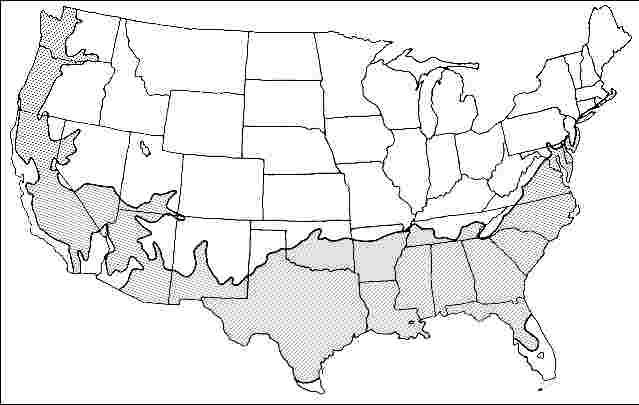
USDA hardiness zones: 7A through 9A (Fig. 2)
Origin: native to North America
Invasive potential: little invasive potential
Uses: tree lawn 3-4 feet wide; tree lawn 4-6 feet wide; tree lawn > 6 ft wide; street without sidewalk; screen; reclamation; specimen; highway median; bonsai
Availability: somewhat available, may have to go out of the region to find the tree
Description
Height: 35 to 40 feet
Spread: 15 to 25 feet
Crown uniformity: irregular
Crown shape: columnar, pyramidal
Crown density: open
Growth rate: moderate
Texture: fine
Foliage
Leaf arrangement: opposite/subopposite
Leaf type: simple
Leaf margin: terminal spine
Leaf shape: scale-like
Leaf venation: none, or difficult to see
Leaf type and persistence: fragrant, evergreen
Leaf blade length: less than 2 inches
Leaf color: green
Fall color: no color change
Fall characteristic: not showy
Flower
Flower color: unknown
Flower characteristics: not showy
Fruit
Fruit shape: cone, round, oval
Fruit length: less than .5 inch
Fruit covering: fleshy
Fruit color: blue
Fruit characteristics: attracts birds; showy; fruit/leaves not a litter problem
Trunk and Branches
Trunk/bark/branches: branches don't droop; showy; typically one trunk; thorns
Pruning requirement: little required
Breakage: resistant
Current year twig color: green, gray, reddish
Current year twig thickness: thin
Wood specific gravity: unknown
Culture
Light requirement: full sun
Soil tolerances: clay; sand; loam; alkaline; acidic; well-drained
Drought tolerance: high
Aerosol salt tolerance: unknown
Other
Roots: not a problem
Winter interest: no
Outstanding tree: no
Ozone sensitivity: unknown
Verticillium wilt susceptibility: resistant
Pest resistance: free of serious pests and diseases
Use and Management
It can be found growing with a single trunk or in clumps. It is probably best used in landscapes which are not irrigated since it is susceptible to juniper blight. Many locations in the eastern part of the country are too humid to successfully grow this tree. It is most often found in the west and in the drier parts of Texas and Oklahoma.
Ashe juniper should be grown in full sun on well-drained soil and easily tolerates alkaline soil.
Propagation is by seed.
Pests
No pests are of major concern.
Diseases
Juniper blight can cause leaf discoloration and defoliation. Ashe juniper is reportedly resistant to cedarapple rust.