
Bats are an important part of our ecosystem, as the only major predator of night-flying insects. During the daytime, they roost in native trees, palms, natural crevices, and caves. Occasionally, a single bat or group of bats (known as a “colony”) is found in a human-made structure. Here are some facts about bats you may find around the home in Florida. The Integrated Pest Management (IPM) in the Home Series is intended to provide answers to frequently asked questions from the public. This publication provides information to educate homeowners on appropriate ways to deal with bats in buildings.

Credit: UF/IFAS video: How to Get Bats Out of Buildings
What are bats?
There are over 1,400 different species of bats in the world, 48 species in the United States, and 13 species in Florida. Bats are active year-round in Florida. They are the only mammal capable of true flight and are very adept flyers. Bats are not rodents; they are more closely related to carnivores and ungulates. Bats in Florida are small, with body lengths of 1.5 to 3 inches, weights of 6 to 20 grams, and wingspans ranging from 8 to 15 inches.
Are bats blind?
Many people believe bats are blind, but they can actually see very well. In addition to their eyesight, bats use echolocation to navigate in the dark and find their prey. Echolocation allows bats “see” in complete darkness as they detect sound waves bouncing off objects in front of them. Because of this ability, along with their excellent flying skills, bats can easily maneuver around obstacles in the dark.
What do bats eat?
All bats in Florida eat insects, including moths, beetles, and flies such as mosquitoes; they can consume up to 1,000 mosquito-sized insects in an hour. Many of these insects are considered agricultural or human pests. In some parts of the world, bats eat fruit and pollen, which helps with seed dispersal and pollination. Only three species of bats feed on blood, and none of them live in the United States.
Do bats carry rabies?
Yes, but very few bats have rabies; it is estimated to occur in less than 1% of wild bats. Despite the low probability of rabies, bats should never be touched or handled. Rabies is a viral disease that affects the nervous system and is almost always fatal to humans. Rabies is transmitted through the saliva of the infected animal, usually through a bite or scratch. If anyone has had direct contact with a bat, was sleeping in a room with a bat, or is unable to tell you if they have had contact (e.g., a young child or pet), they should seek medical attention immediately.
Are there other diseases associated with bats?
Yes. It is possible for bats to carry diseases other than rabies that pose health risks to humans and pets.
- Bats’ droppings, also known as guano, turn into dust when dry. Inhaling this dust can cause allergies, asthma, or other medical issues, among them
histoplasmosis, a fungal disease contracted through breathing airborne spores found in guano. Histoplasmosis can be very serious but is treatable.
- Bats can harbor other viruses and diseases that usually do not make bats ill but can be harmful to humans. These diseases are transmitted when humans contact bat body fluids or when they eat bats; therefore, it is not safe to handle or eat them.
- Bats may be hosts for parasites, mites, fleas, ticks, and bat bugs. These pests do not typically transmit to humans or pets, however.

Credit: UF/IFAS video: How to Get Bats Out of Buildings
How do I know if a bat colony is in my attic?
You may have seen bats flying around outside near your dwelling at night but spotting them nearby does not necessarily mean they are roosting in your home. One way to identify the presence of bats using a building is by the greasy stains they leave at entry and exit points. Accumulation of bat guano is another way to identify an infestation. Bats are quiet and do not chatter or gnaw on wood. You can verify that you have bats in your attic if you see them exiting the eaves or other openings at dusk.

Credit: UF/IFAS video: How to Get Bats Out of Buildings
Why are they in my house?
Bats seek shelter every morning to roost and every summer to raise their young, called “pups.” Each female typically has only one pup per year. When the natural structures that bats use are not available, or when human-made structures mimic characteristics of natural roosts, bats will sometimes choose to roost in uninhabited regions in human-built structures. Bats have been found in attics, under roof tiles, in woodpiles, in outbuildings, in furled patio umbrellas, and behind shutters, to name a few favored spots.
How do I prevent bats from entering my home?
Bats may roost in attics, chimneys, and other dark, enclosed spaces. They can enter buildings through cracks and gaps as small as 3/8” (approximately the size of a fingertip) in the roof or walls. To prevent bats from entering, all gaps in the roof and walls should be sealed, windows should be screened, chimneys should be capped, and attics should have vent covers.
What if a single bat is inside my living space?
Bats sometimes fly inside by accident. If the bat did not come into direct physical contact with a human or pet, then you can try to help the bat outside. If the bat is flying, you can open doors and windows to assist them out. If the bat is on the ground, use a thick towel or heavy leather gloves to move them outside. You can also help a bat off the ground by placing the bristle end of a long-handled broom next to them, wait for the bat to climb on, then carry the broom outside and lean it with bristle end up against a tree. Remember to never touch a bat with your bare hands.
If you find a bat inside and you are unsure if people have been bitten, call the Department of Health to test the bat for disease. Anyone in the home who could have been bitten should seek medical attention immediately.
Credit: UF/IFAS video: How to Get Bats Out of Buildings
How do I remove a bat colony from my home?
Each state’s regulations vary. Contact your state wildlife office for more specifics. In Florida, live bat exclusion is the most effective and only legal way to get rid of bats from the home. Exclusion is the practice of installing a one-way exit for the bats that prevents them from re-entering a roost. It is illegal to kill, harm, or harass any bats in Florida at any time.
Exclusions can occur only from August 15 through April 15.
During the maternity season of April 16 through August 14, it is illegal to evict or block bats because pups cannot fly and would be trapped inside the house to die. The decay of dead bats can produce offensive smells and attract pests such as cockroaches. Therefore, the best time to conduct an exclusion for bats in Florida is during fall and winter.
There are five steps to an exclusion:
- Determine where the bats are entering/exiting the building, and identify species (report any Florida bonneted bats; see below)
- Permanently seal all but two to three exit points.
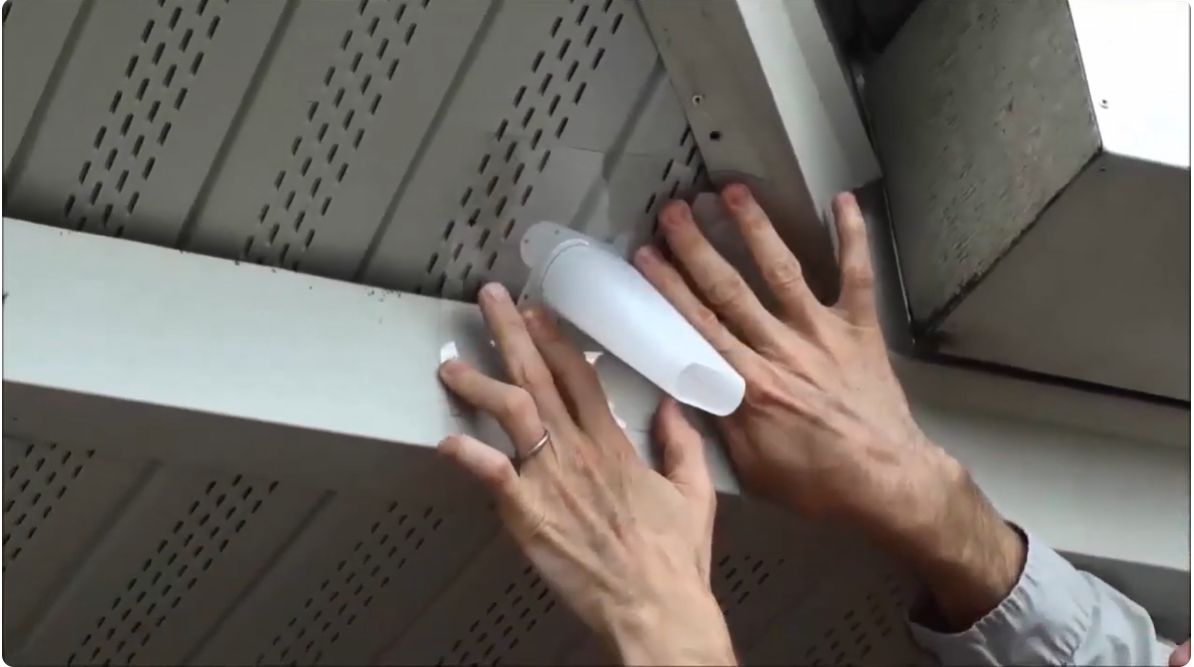
- Install a temporary one-way exclusion door/netting/tube on each of the remaining exit points.
- Wait at least four to seven consecutive nights when the weather is dry and above 50 degrees Fahrenheit.
- Confirm all bats have left the building and permanently seal remaining exit points.
You may want to hire a professional to conduct the exclusion for you. Ensure the work is done properly to avoid future expenses. The How to Get Bats out of a Building video and the Bats in Buildings | FWC website have information on proper procedures.
Important: The bonneted bat, a rare species inhabiting south and central Florida, cannot be excluded or removed at any time of the year; contact your local Florida Fish and Wildlife Conservation Commission office for assistance. We recommend contacting a professional to assist in identification of the Florida Bonneted Bat.
Can I get a special permit to exclude bats during maternity season?
In extraordinary circumstances, removing bats during maternity season may be possible with a special permit. Contact the Florida Fish and Wildlife Conservation Commission (FWC) regarding a service request; you can use their online form, email, or call their Wildlife Hotline. The Wildlife Hotline is 888-404-FWCC.
If I can’t do an exclusion during maternity season, then what can I do?
You can complete step one (determine entry/exit and identify the species) and step two (permanently seal all but two to three exit points). You must wait to complete step three until at least August 15 and when all the pups are flying.
Can bats be controlled with other methods like chemicals or sonar?
No. Mothballs, bat baits, motion sensor lights, and bat repellents are ineffective. There is no research to support the effectiveness of home remedies. Although you can purchase ultrasonic devices, they do not repel bats and can lead to deafness in other pets.
How should I protect my health when cleaning up after an infestation?
- Wear an N95 respirator or mask.
- Use rubber gloves.
- Reduce or eliminate dust by dampening surfaces with soapy water.
- Disinfect with a bleach solution (ratio: one part bleach to nine parts water).
- Contact a professional to remove large accumulations of bat droppings (guano).
- Bag and dispose of cleaning cloths or mops after cleaning.
Will a bat house help keep bats out of my home?
While a bat house will not lure bats out of your home, it may potentially reduce the chance they will move into your home. A bat house is another alternative for the bats if their natural habitat is limited. If you have a bat house in your yard, they may choose the bat house instead of your home. Learn more about building effective bat houses for Florida. Check with your homeowners’ association to find out whether your neighborhood has restrictions.
Conclusion
Although bats in the home can pose health risks to humans and pets, they are beneficial to our environment because they are the major predator to night flying insects. The most important step to preventing bats from entering your home is eliminating openings and sealing cracks before bats move in. Seek assistance if you find a bat inside. All bats in Florida are protected, and it is important to follow state and federal laws.
Additional Resources
For more information contact your local Extension office or check out the following resources: