
This document is a part of a series originally written by Edward F. Gilman.
Introduction
Glossy abelia, also called largeflower abelia (hybrid of A. chinensis and A. uniflora), is a fine-textured, semi-evergreen, sprawling shrub with 1½-inch-long red-tinged leaves arranged along multiple thin, arching stems (Figures 1 and 2). The stems arise from the ground in a vase shape, spreading apart as they ascend into the foliage. This plant reaches a height and spread of 6 to 8 feet, but certain cultivars have a more compact growth habit. Glossy abelia is unique in that the leaves (Figure 3) retain their reddish foliage (excluding certain cultivars) throughout summer, whereas many species with this coloration lose it later in the summer. While it is evergreen in its southern range, glossy abelia will lose 50% of its leaves in colder climates, and the remaining leaves will take on a more pronounced reddish coloration. This plant blooms from spring through fall, producing terminal clusters of small, delicate white to pink tubular flowers (Figure 4). Certain cultivars may have varying colored flowers (Table 1).

Credit: UF/IFAS
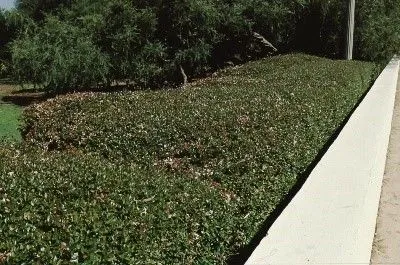
Credit: UF/IFAS

Credit: UF/IFAS

Credit: Edward F. Gilman, UF/IFAS
General Information
Scientific name: Abelia x grandiflora
Pronunciation: uh-BEEL-ee-uh gran-dif-FLOR-uh
Common name(s): glossy abelia, largeflower abelia
Family: Caprifoliaceae
Plant type: shrub
USDA hardiness zones: 5A through 9B (Figures 5 and 6)

Credit: This map is based on the 2023 USDA Plant Hardiness Zone Map. Visit https://planthardiness.ars.usda.gov/ for specific zone information.

Credit: This map is based on the 2023 USDA Plant Hardiness Zone Map. Visit https://planthardiness.ars.usda.gov/ for specific zone information.
Planting month for zone 7: year-round
Planting month for zone 8: year-round
Planting month for zone 9: year-round
Origin: not native to North America
Invasive potential: not considered a problem species at this time and may be recommended by UF/IFAS faculty (reassess in 10 years)
Uses: border; mass planting; container or above-ground planter; superior hedge; specimen; screen; attracts butterflies, hummingbirds, and other pollinators
Availability: plant is readily available
Description
Height: 6 to 8 feet; dependent upon cultivar selection
Spread: 6 to 8 feet; dependent upon cultivar selection
Plant habit: vase shape; round; upright; arching
Plant density: moderate
Growth rate: moderate
Texture: fine
Foliage
Leaf arrangement: whorled
Leaf type: simple
Leaf margin: serrate
Leaf shape: ovate
Leaf venation: pinnate
Leaf type and persistence: evergreen, semi-evergreen in colder weather
Leaf blade length: less than 2 inches
Leaf color: purple or red new growth, dark green mature foliage; cultivars may have variegated or golden foliage and may lack red coloration.
Fall color: purple following cold weather
Fall characteristic: showy
Flower
Flower color: white; pink; dependent upon cultivar selection (Table 1)
Flower characteristic: spring flowering; summer flowering; fall flowering; pleasant fragrance
Fruit
Fruit shape: oval
Fruit length: less than 1/2 inch
Fruit cover: dry or hard
Fruit color: tan
Fruit characteristic: inconspicuous and not showy
Trunk and Branches
Trunk/bark/branches: not particularly showy; typically multi-trunked or clumping stems
Current year stem/twig color: reddish
Current year stem/twig thickness: thin
Culture
Light requirement: plant grows in partial shade; plant grows in full sun
Soil tolerances: acidic; slightly alkaline; clay; sand; loam
Drought tolerance: moderate
Soil salt tolerance: poor
Plant spacing: 36 to 60 inches
Other
Roots: usually not a problem
Winter interest: plant has winter interest due to reddish-purple foliage in cool weather (dependent upon cultivar selection)
Pest resistance: no serious pests are normally seen on the plant
Use and Management
Glossy abelia grows in an upright, spreading vase shape if left unpruned, with numerous thin stems arising from the ground. Stems eventually branch near their tips, forming a shrub with a full top and a thin bottom. New foliage emerges as a maroon color, fading to dark green as it matures, lending a reddish cast to the plant during active growth (excluding some cultivars). The small white to pink tubular flowers bloom on new growth and add color continuously during the summer months.
The arching nature of glossy abelia makes it ideal for use as a specimen, foundation plant, or shrub border. It also can be planted along a steep bank for erosion control or may be clipped into a hedge. If glossy abelia is pruned into a hedge, ensure the top of the hedge is clipped narrower than the bottom to allow adequate light to reach the lower foliage. This will promote overall plant fullness. Glossy abelia benefits from springtime pruning and will require occasional thinning to keep it in bounds as a hedge. Thinning this plant will help light reach the interior foliage, stimulating branching and creating a fuller plant.
Glossy abelia enjoys fairly rich, moist but well-drained soil in a full sun or lightly shaded location and has good drought tolerance. Plants become thin and unattractive in the shade and do not flower. Plant on 4- to 6-foot centers to form a screen or foundation or plant, slightly closer for a hedge. The foliage darkens during the winter, but plants generally remain full during the cold months.
Propagation is by cuttings of long, leafless hardwood stems taken in November to January.
Table 1. Popular abelia cultivars in the industry, and their size and notable traits.


Design Considerations
Glossy abelia works well as a background or massing plant to highlight the forms and colors of companion plants. The fine texture and small leaves of the abelia will show well with contrasting plant features, such as large leaves, coarse texture, thick stems, and dark green color. Contrasting size and shape, such as low-growing groundcover with a sprawling, mounding form, will emphasize the upright, vase shape of glossy abelia. To create plant masses in large areas, select plants with similar characteristics that blend with glossy abelia. Similar textures include thin blades and clumping, arching forms of grasses and other vase-shaped, small-leaved shrubs
Pests and Diseases
Pest issues of minor concern include aphids. No diseases of major concern.