
This Florida-Friendly Landscaping™ publication is part of a series originally written by Edward F. Gilman. Visit https://ffl.ifas.ufl.edu/ to learn more about creating and maintaining attractive landscapes that protect Florida's water resources and environment.
Introduction
Buttonbush (Cephalanthus occidentalis) is a large deciduous shrub with a rounded to irregular growth form that reaches a height of 12 feet and spread of 10 feet (Figure 1). As this plant grows larger, the multi-branched plant takes on a more irregular form. Buttonbush has attractive, medium green leaves (Figure 2) followed by a late spring flower display unmatched by many plants. White flowers have an almost whimsical appearance, are borne in a 1- to 1½-inch-diameter globes, and fill the canopy when few other plants are in flower (Figure 3). These clusters of tubular flowers are highly attractive to pollinators including bees, butterflies, and hummingbirds. It is also the larval host plant for the promethea silkmoth (Callosamia promethea) and many other moth species. Showy bright red fruits form by late summer and remain on the plant for the rest of the growing season (Figure 4). The fruit capsule dries and turns brown once mature (Figure 5). This plant may be somewhat inconspicuous until it flowers or displays its fruit.

Credit: © John D Reynolds, some rights reserved (CC BY-NC) via iNaturalist

Credit: © Skyler Principe, some rights reserved (CC BY) via iNaturalist

Credit: Keighly Graves, UF/IFAS

Credit: © plantmandrew, some rights reserved (CC BY-NC) via iNaturalist
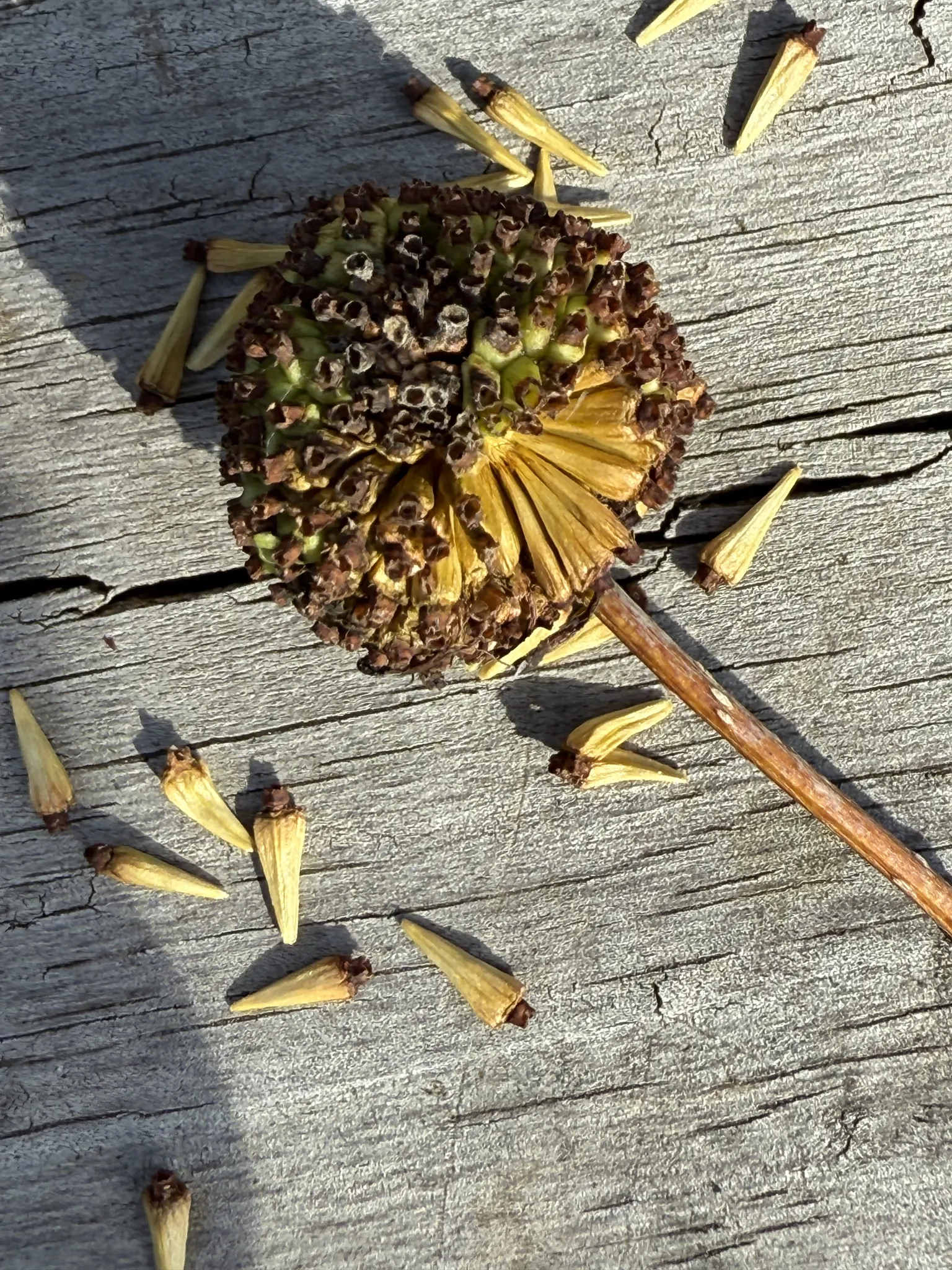
Credit: © V. Ross Johnson, some rights reserved (CC BY-SA) via iNaturalist
Buttonbush is native to Florida with a distribution throughout wooded and wetland areas. It is also native to much of the eastern United States, with a distribution through some southwestern states and parts of Mexico. This plant requires moist soil conditions to thrive, is well-suited for rain gardens, wooded or shade gardens, planting near a stream or riverbank, and attracts pollinators.
General Information
Scientific name: Cephalanthus occidentalis
Pronunciation: seff-uh-LANTH-us ock-sid-en-TAY-liss
Common name(s): buttonbush
Family: Rubiaceae
Plant type: shrub
USDA hardiness zones: 4A through 11B (Figures 6 and 7)

Credit: This map is based on the 2023 USDA Plant Hardiness Zone Map. Visit https://planthardiness.ars.usda.gov/ for specific zone information.

Credit: This map is based on the 2023 USDA Plant Hardiness Zone Map. Visit https://planthardiness.ars.usda.gov/ for specific zone information.
Planting month for zone 7: year-round
Planting month for zone 8: year-round
Planting month for zone 9: year-round
Planting month for zones 10 and 11: year-round
Origin: native to Florida
Invasive potential: not known to be invasive
Uses: specimen; border; mass planting; attracts butterflies; riparian zone; rain garden; wooded areas
Availability: somewhat available, may have to go out of the region to find the plant
Description
Height: 6 to 12 feet
Spread: 6 to 10 feet
Plant habit: round; irregular
Plant density: moderate
Growth rate: slow
Texture: medium
Foliage
Leaf arrangement: whorled
Leaf type: simple
Leaf margin: entire
Leaf shape: ovate
Leaf venation: pinnate
Leaf type and persistence: deciduous
Leaf blade length: 4 to 8 inches
Leaf color: green
Fall color: no fall color change
Fall characteristic: not showy
Flower
Flower color: white
Flower characteristic: pleasant fragrance; spring-flowering; summer-flowering; showy
Fruit
Fruit shape: round
Fruit length: ½ to 1 inch
Fruit cover: dry or hard
Fruit color: red
Fruit characteristic: showy
Trunk and Branches
Trunk/bark/branches: not particularly showy; typically multi-trunked or clumping stems
Current year stem/twig color: gray/silver
Current year stem/twig thickness: thin
Culture
Light requirement: plant grows in full sun; plant grows in partial sun
Soil tolerances: acidic; slightly alkaline; sand; loam; clay
Drought tolerance: poor; performs best in moist locations
Soil salt tolerances: poor
Plant spacing: 36 to 60 inches
Other
Roots: usually not a problem
Winter interest: no special winter interest
Pest resistance: long-term health usually not affected by pests
Toxicity: this plant exhibits low toxic characteristics; bark contains Cephalothin; causes issues if ingested
Use and Management
Most specimens of buttonbush are small, reaching no more than about 4 to 6 feet tall. Older plants can reach to 10 feet tall in a moist site and grow to more than 12 feet wide. Several stems emerge from the ground forming a flat-topped, vase-shaped canopy. Some pruning may be needed to help this plant maintain its shape. This shrub is best suited for wet sites; buttonbush adapts to landscape sites provided roots are irrigated or kept moist to wet from a nearby stream or pond. Some dieback may occur, especially in the southern part of its range, during moderate or extended drought. This is a hardy plant that is tolerant of flooding, heat; is moderately herbivore resistant; and aids in preventing erosion on the banks of streams and rivers. Buttonbush should be located near a water source or provided additional irrigation during drought conditions.
Propagation is by cuttings or seed.
Design Considerations
Buttonbush provides unique structure and texture, highlighted by fragrant, spherical white flowers in mid-summer that are highly attractive to pollinators. Its coarse, glossy foliage and rugged, open habit create a bold, naturalistic form even when not in flower.
A shrub for wet locations, Buttonbush is an excellent choice for the low points of rain gardens, pond edges, bioswales, or any consistently damp area where other shrubs would fail. Given its large, sprawling size, it is best used as a background plant or a naturalistic specimen with ample room to grow. It is not suited for formal hedges or dry foundation plantings.
For a cohesive design, pair it with other moisture-loving plants. Contrast its form with the vibrant red spires of cardinal flower (Lobelia cardinalis) or the sword-like leaves of blue flag iris (Iris virginica). For complementary late-season blooms, add swamp milkweed (Asclepias incarnata), and for winter interest, plant a nearby grouping of red osier dogwood (Cornus sericea) for its brilliant red stems.
Pests and Diseases
No pests or diseases of major concern.