
This Florida-Friendly Landscaping™ publication is part of a document series originally written by Edward F. Gilman. Visit https://FloridaFriendlyLandscaping.com to learn more about creating and maintaining attractive landscapes that protect Florida's water resources and environment.
Introduction
Coreopsis is a genus of plants in the Asteraceae plant family, which contains around 40 species. Thirteen species occur in Florida, eleven of which are widely considered native to Florida. Coreopsis is the Florida state wildflower. Coreopsis leavenworthii is found throughout Florida, and until recently was considered endemic.
Leavenworth’s tickseed is an herbaceous annual to short-lived perennial with an upright growth habit (Figure 1). It has a height and spread of 1 to 3 feet. Leaves are deciduous, pinnately to bipinnately compound, and 6 to 8 inches in length (Figure 2). Yellow flowers with a dark brown center are held upright upon tall leafless stems (Figure 3). Flowers are followed by the dried seed head, which contains small, brown achenes (Figure 4). Leavenworth’s tickseed may be used as edging, mass plantings, in wildflower meadows, and may be used as a part of a pollinator garden as it attracts butterflies and bees.

Credit: Ryan Fessenden
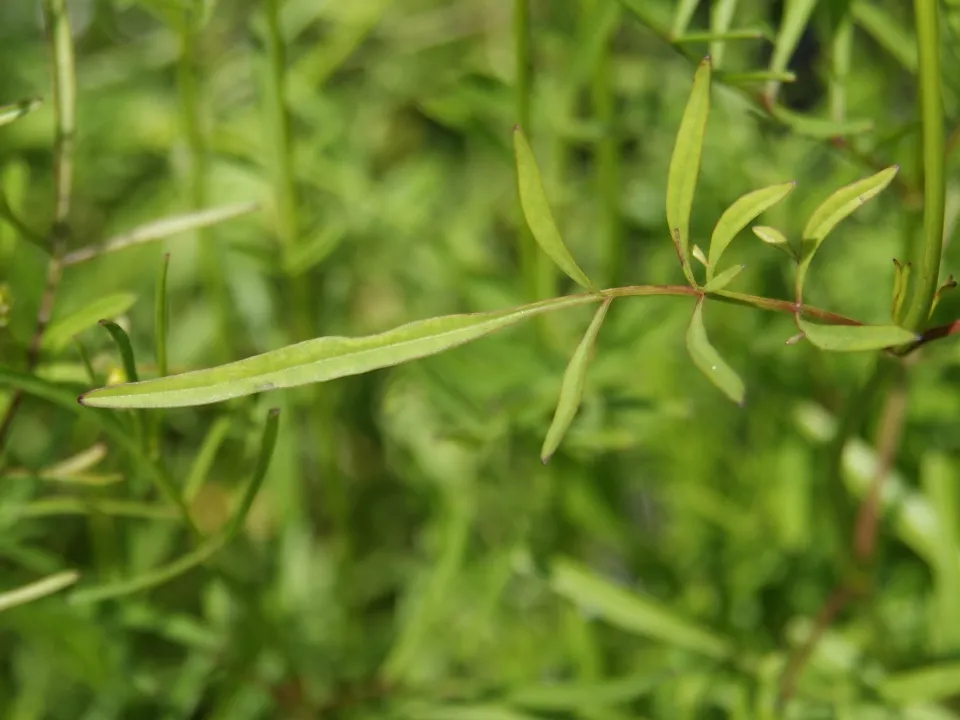
Credit: Ryan Fessenden

Credit: Ryan Fessenden

Credit: © evanaturalist, some rights reserved (CC BY-NC) via iNaturalist
General Information
Scientific name: Coreopsis leavenworthii
Pronunciation: kor-ree-OP-sis lev-en-WERTH-ee-eye
Common name(s): Leavenworth's tickseed
Family: Asteraceae
Plant type: herbaceous; annual to short-lived perennial
USDA hardiness zones: 8A through 11B (Figures 5 and 6)

Credit: This map is based on the 2023 USDA Plant Hardiness Zone Map. Visit https://planthardiness.ars.usda.gov/ for specific zone information.
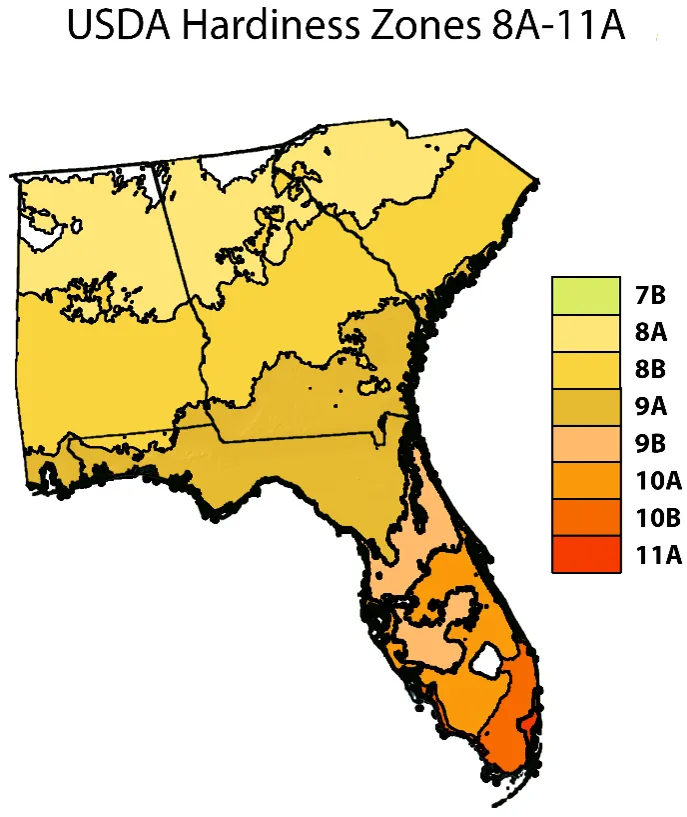
Credit: This map is based on the 2023 USDA Plant Hardiness Zone Map. Visit https://planthardiness.ars.usda.gov/ for specific zone information.
Planting months for seed all zones: Sept. to Jan.
Planting months for transplants zones 8 and 9: mid Mar. to May
Planting months for transplants zones 10 and 11: mid Feb. to May
Origin: native to Florida
Invasive potential: may self-seed each year
Uses: edging; mass planting; attracts butterflies; wildflower meadow
Availability: somewhat available, may have to go out of your local area to find the plant
Description
Height: 1 to 3 feet
Spread: 1 to 3 feet
Plant habit: upright
Plant density: open
Growth rate: moderate
Texture: fine
Foliage
Leaf arrangement: opposite/subopposite
Leaf type: pinnately to bipinnately compound
Leaf margin: entire
Leaf shape: linear to oblong
Leaf venation: not applicable
Leaf type and persistence: deciduous
Leaf blade length: 6 to 8 inches
Leaf color: green
Fall color: not applicable
Fall characteristic: not applicable
Flower
Flower color: yellow, with dark brown center
Flower characteristic: spring, summer, fall, winter; depending on region of Florida
Fruit
Fruit type: achene
Fruit shape: oval
Fruit length: 1/8 inch
Fruit cover: not applicable
Fruit color: brown
Fruit characteristic: inconspicuous and not showy
Trunk and Branches
Current year stem/twig color: green
Current year stem/twig thickness: thin
Culture
Light requirement: plant grows in full sun; plant grows in partial shade
Soil tolerances: acidic; slightly alkaline; sand; loam; clay; occasionally wet
Drought tolerance: low
Soil salt tolerance: unknown
Plant spacing: 6 to 12 inches
Other
Roots: not applicable
Winter interest: may flower during winter months in south Florida
Use and Management
Coreopsis flowers most abundantly when planted in full sun but also thrive in partial shade. It is adaptable to a range of soil conditions that are acidic to slightly alkaline in pH. A well-drained soil that is not too rich will aid in maintaining the plant’s upright growth structure. Keep the soil relatively moist and remove dead flowers immediately to prolong blooming. Coreopsis species are generally short-lived and may only last 3 to 4 seasons. Coreopsis work well as a border or edging in a garden and are also excellent for naturalizing as they will reseed themselves. New plants may emerge beyond the intended area of cultivation. The stalks may become long and weak and tend to break in windy or rainy weather.
Seed is the most common method of propagation for coreopsis. Plants may also be divided in the spring or fall.
Design Considerations
Coreopsis provides bright, long-season yellow blooms and fine, airy foliage, making it ideal for massed drifts in naturalized meadows, informal borders, and roadsides where it can freely self-seed. Thriving in full sun to light shade, it adapts to various soils from moist clay to dry sand. Pair it effectively with grasses like pink muhly (Muhlenbergia capillaris) and Fakahatchee (Tripsacum dactyloides); sun-loving wildflowers such as blanketflower (Gaillardia pulchella), Stokes’ aster (Stokesia laevis), and blue sage (Salvia spp.); and structural accents like coontie (Zamia integrifolia) and yucca (Yucca spp.). In wetter sites, it combines well with blue flag iris (Iris virginica) and cardinal flower (Lobelia cardinalis) for extended seasonal interest. Space plants 12–18 inches apart, deadheading selectively to prolong blooming while allowing some to set seed for natural regeneration.
Pests and Diseases
No pests or diseases of major concern.