
Introduction
Florida soapberry grows at a moderate rate to 30 to 40 feet tall. The pinnately compound, evergreen leaves are 12 inches long with each leaflet four inches long. 10-inch-long panicles of small, white flowers appear during fall, winter, and spring but these are fairly inconspicuous. The fleshy fruits which follow are less than an inch-long, shiny, and orange/brown. The seeds inside are poisonous, a fact which should be considered in the tree's placement in the landscape, especially if children will be present. The bark is rough and gray. The common name of Soapberry comes from to the soap-like material which is made from the berries in tropical countries.

Credit: Ed Gilman, UF/IFAS
General Information
Scientific name: Sapindus saponaria
Pronunciation: SAP-in-dus sap-oh-NAIR-ee-uh
Common name(s): Florida soapberry, wingleaf soapberry
Family: Sapindaceae
USDA hardiness zones: 10A through 11 (Fig. 2)
Origin: native to North America
Invasive potential: little invasive potential
Uses: tree lawn 4-6 feet wide; tree lawn > 6 ft wide; reclamation; street without sidewalk; shade; highway median
Availability: somewhat available, may have to go out of the region to find the tree

Description
Height: 30 to 40 feet
Spread: 25 to 35 feet
Crown uniformity: symmetrical
Crown shape: round
Crown density: dense
Growth rate: moderate
Texture: medium
Foliage
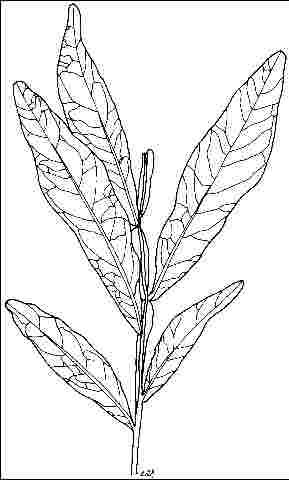
Leaf arrangement: alternate (Fig. 3)
Leaf type: odd-pinnately compound
Leaf margin: undulate, sinuate/undulate
Leaf shape: linear, lanceolate
Leaf venation: pinnate, brachidodrome
Leaf type and persistence: broadleaf evergreen, evergreen
Leaf blade length: 2 to 4 inches
Leaf color: green
Fall color: no color change
Fall characteristic: not showy
Flower
Flower color: white/cream/gray
Flower characteristics: not showy
Fruit
Fruit shape: round
Fruit length: .5 to 1 inch
Fruit covering: fleshy
Fruit color: orange, brown
Fruit characteristics: does not attract wildlife; showy; fruit/leaves a litter problem
Trunk and Branches
Trunk/bark/branches: branches droop; not showy; typically one trunk; thorns
Pruning requirement: needed for strong structure
Breakage: resistant
Current year twig color: gray, brown
Current year twig thickness: medium
Wood specific gravity: unknown
Culture
Light requirement: full sun
Soil tolerances: clay; sand; loam; alkaline; acidic; well-drained
Drought tolerance: high
Aerosol salt tolerance: high
Other
Roots: not a problem
Winter interest: no
Outstanding tree: yes
Ozone sensitivity: unknown
Verticillium wilt susceptibility: unknown
Pest resistance: free of serious pests and diseases
Use and Management
Soapberry can be planted in low maintenance landscapes for the unusually prominent, orange-colored berries. They require little care other than some initial pruning to direct growth and to develop a strong branch structure. The bushy growth habit of this medium-sized tree combines nicely with shrubs and ground covers planted beneath and around the tree. Fruits attract the boxelder bug.
Florida Soapberry should be grown in full sun and will tolerate almost any soil. It is highly drought- and salt-tolerant.
Propagation is by seed.
Pests and Diseases
No pests or diseases of major concern.