A frost-tender, tropical, evergreen tree, tamarind is densely foliated with blue green to pale green, compound, feathery leaflets which give the broad, spreading crown a light, airy effect. Tamarind may reach heights of 65 feet and a spread of 50 feet but is more often seen smaller. The delicate leaflets cast a diffuse, dappled shade which will allow enough sunlight to penetrate for a lawn to thrive beneath this upright, dome-shaped tree.
Figure 1. Full Form—Tamarindus indica: tamarind
General Information
Scientific name: Tamarindus indica
Pronunciation: tam-uh-RIN-dus IN-dih-kuh
Common name(s): tamarind
Family: Fabaceae
USDA hardiness zones: 10A through 11 (Figure 2)
Origin: native to tropical Africa and Madagascar
UF/IFAS Invasive Assessment Status: not considered a problem species at this time, may be recommended
Uses: street without sidewalk; shade; specimen; parking lot island > 200 sq ft; tree lawn > 6 ft wide; highway median
Figure 2. Range
Description
Height: 40 to 65 feet
Spread: 40 to 50 feet
Crown uniformity: irregular
Crown shape: vase, round
Crown density: dense
Growth rate: moderate
Texture: fine
Foliage
Leaf arrangement: alternate
Leaf type: even-pinnately compound; made up of 10 to 15 pairs of leaflets
Leaf margin: entire
Leaf shape: elliptic
Leaf venation: pinnate
Leaf type and persistence: evergreen
Leaf blade length: 2 to 5 inches; leaflets are 1/3 to 3/4 inch
Leaf color: blue green to pale green on top, paler green underneath
Fall color: no color change
Fall characteristic: not showy
Figure 3. Leaf—Tamarindus indica: tamarind
Flower
Flower color: pale yellow with reddish pink veins
Flower characteristics: not showy; 3 petals; emerges in clusters on 6" long, pendulant racemes
Flowering: late spring to summer
Figure 4. Flower—Tamarindus indica: tamarind
Fruit
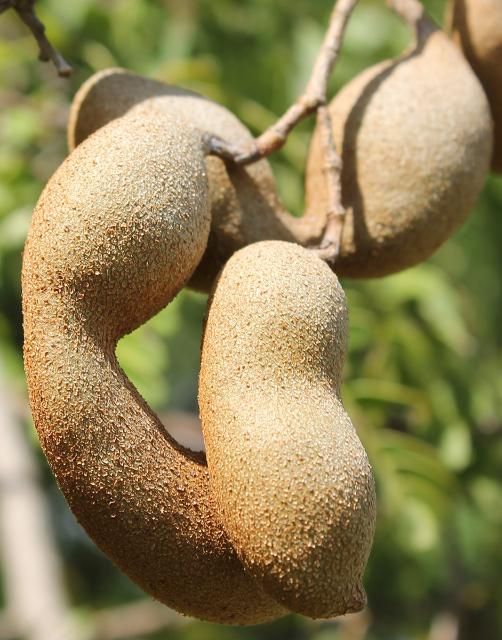
Fruit shape: slightly curved, indehiscent pod
Fruit length: 2 to 7 inches
Fruit covering: dry or hard; velvety
Fruit color: turns from green to brown when mature
Fruit characteristics: does not attract wildlife; showy; fruit/leaves a litter problem
Fruiting: late fall to early summer
Figure 5. Fruit—Tamarindus indica: tamarind
Trunk and Branches
Trunk/ranches: branches droop; showy; typically one trunk; no thorns
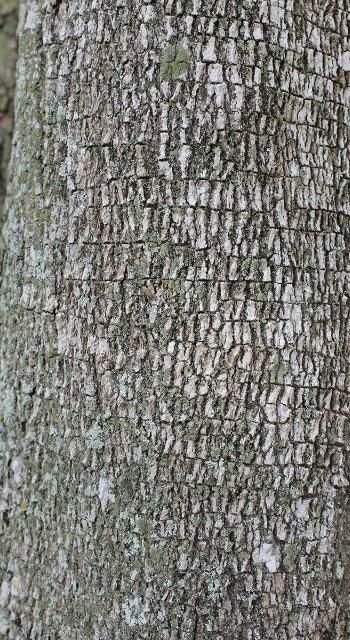
Bark: gray brown to blackish and rough, with vertical fissures and horizontal cracks
Pest resistance: free of serious pests and diseases
Use and Management
The twigs and branches of tamarind are very resistant to wind, making it especially useful as a shade or street tree for breezy locations. But tamarind has low salt-tolerance so do not locate it close to the beach. In spring, small yellow and red flowers appear on short racemes and are followed by the production of brittle, brown, seven-inch-long, velvety pods. These sticky pods are filled with a sweet-sour, dark brown paste which surrounds two or three seeds. They normally dry up and do not become messy, but some people will undoubtedly object to the fruit falling on sidewalks or streets. Tamarind is grown commercially in the tropics for production of this edible paste, which is used as an ingredient for Worcestershire sauce, soft drinks, chutneys, and curries.
Tamarind should be grown only in frost-free regions in full sun on moist, fertile, sandy soil. It survived 26 degrees for several hours in West Palm Beach in the mid-1980s. Care should be taken in the placement of tamarind as the seed pods may be messy for a short period when they drop on hard surfaces. Also, be sure to maintain a strong tree structure including major branches well-spaced along one central trunk.
Propagation is by seeds which germinate readily or by cuttings. If quality fruit is desired, plants should be air-layered, grafted, or shield-budded.
Pests and Diseases
No pests or diseases are of major concern.
Reference
Koeser, A.K., Friedman, M.H., Hasing, G., Finley, H., Schelb, J. 2017. Trees: South Florida and the Keys. Gainesville: University of Florida Institute of Food and Agricultural Sciences.