
Introduction
Eugenia is a large group of plants, some native and some non-native, including evergreen trees and shrubs, some of which have been reclassified to the genus Syzygium . The evergreen leaves are firm and glossy, and the flowers white. It is the dried buds of Eugenia aromatica ( Syzygium aromaticum ) which become the fragrant "herb" cloves. The flowers are followed by the production of berries, some types of which are edible. All these traits - the attractive foliage, flowers, and berries - help make Eugenia a popular landscape choice in warm climate areas, such as California, Florida, and Hawaii. Eugenia confusa (Ironwood, Red Stopper) is native to Florida and grows to about 35 feet and is well suited for street tree and parking lot planting. Eugenia foetida (Spanish Stopper) is also native and grows to about 15 feet tall.
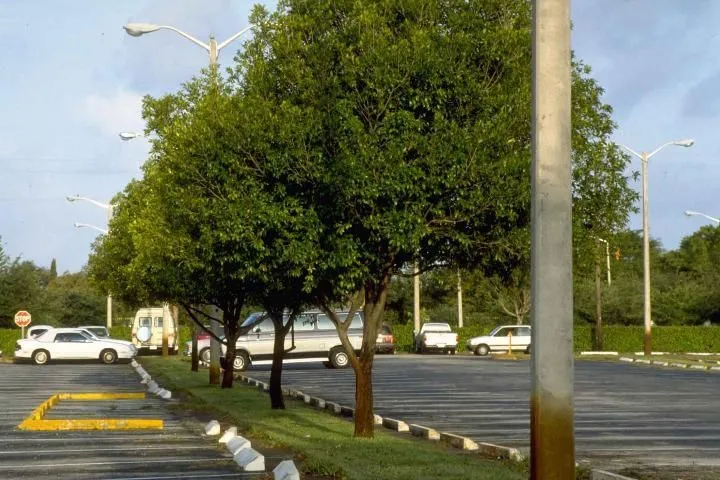
Credit: Ed Gilman, UF/IFAS
General Information
Scientific name: Eugenia spp.
Pronunciation: yoo-JEE-nee-uh species
Common name(s): Stopper, Eugenia
Family: Myrtaceae
USDA hardiness zones: 10B through 11 (Fig. 2)
Origin: native to North America
Invasive potential: According to the IFAS Assessment of the Status of Non-Native Plants in Florida's
Natural Areas (Fox et al. 2005), (Surinam cherry) may be used northern and central zones of Florida (counties are listed by zone at: https://assessment.ifas.ufl.edu/). It is not documented in undisturbed areas in the northern zone and so is not considered to be a problem species; has been found in natural areas in the central zone and there E . uniflora should be treated with caution and managed to prevent its escape. In the southern counties of Florida, this species is invasive and not recommended for use (but to see if exceptions for specified and limited use have been approved since publication, check the Conclusions table at: https://assessment.ifas.ufl.edu/).
Uses: tree lawn 3-4 feet wide; tree lawn 4-6 feet wide; tree lawn > 6 ft wide; street without sidewalk; sidewalk cutout (tree pit); parking lot island < 100 sq ft; parking lot island 100-200 sq ft; parking lot island > 200 sq ft; reclamation; trained as a standard; container or planter; deck or patio; hedge; screen; specimen; highway median; shade
Availability: not native to North America

Height: 15 to 30 feet
Spread: 15 to 25 feet
Crown uniformity: symmetrical
Crown shape: upright/erect, vase, oval
Crown density: dense
Growth rate: moderate
Texture: medium
Foliage
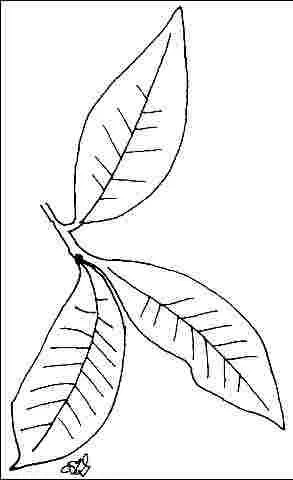
Leaf arrangement: opposite/subopposite (Fig. 3)
Leaf type: simple
Leaf margin: entire
Leaf shape: ovate
Leaf venation: pinnate
Leaf type and persistence: evergreen
Leaf blade length: 2 to 4 inches
Leaf color: green
Fall color: no color change
Fall characteristic: not showy
Flower
Flower color: white/cream/gray
Flower characteristics: not showy
Fruit
Fruit shape: round
Fruit length: .5 to 1 inch
Fruit covering: fleshy
Fruit color: red, black
Fruit characteristics: attracts birds; showy; fruit/leaves a litter problem
Trunk and Branches
Trunk/bark/branches: branches don't droop; showy; typically multi-trunked; thorns
Pruning requirement: little required
Breakage: resistant
Current year twig color: brown
Current year twig thickness: thin
Wood specific gravity: unknown
Culture
Light requirement: full sun, partial sun or partial shade
Soil tolerances: clay; sand; loam; alkaline; acidic; well-drained
Drought tolerance: high
Aerosol salt tolerance: moderate
Other
Roots: not a problem
Winter interest: no
Outstanding tree: no
Ozone sensitivity: unknown
Verticillium wilt susceptibility: unknown
Pest resistance: free of serious pests and diseases
Use and Management
The smooth, brown to grey, mottled bark and tight canopy of fine-textured leaves make Eugenia well-suited for planting as a specimen in any yard. Trees can be trained in the nursery to one central trunk or allowed and encouraged to develop multiple trunks. They create shade for a patio or deck, but will not grow to the large, often overpowering size of a Ficus tree. They are often used along streets, in highway medians, and in parking lots because they adapt to small soil spaces and do not become very large. Street and parking lot trees are often specified to have one trunk to allow for vehicle clearance beneath the crown. Multiple-trunked trees are often specified for specimen planting so the beautiful bark can be displayed.
Eugenia should be grown in full sun or part shade on well-drained soil. Once established in the landscape, they are drought-tolerant, requiring little, if any, irrigation.
Propagation is by seeds or cuttings.
Pests
Psyllids limit the tree's usefulness in parts of California.
Diseases
No diseases are of major concern.